Short on Time? Give Circuit Training a Try at AFAC Gym
Some days, getting to the gym feels like a workout all by itself. Between work, family responsibilities, and everything else on your calendar, you may have a narrow window to exercise. How do you fit strength training and cardio into that time while keeping your routine interesting?
Circuit training gives you a practical way to work toward several fitness goals in one session. By moving through a planned sequence of exercises, you can challenge different muscle groups and develop endurance without spending your entire day at the gym. The key is choosing movements, resistance, and recovery periods that work together.
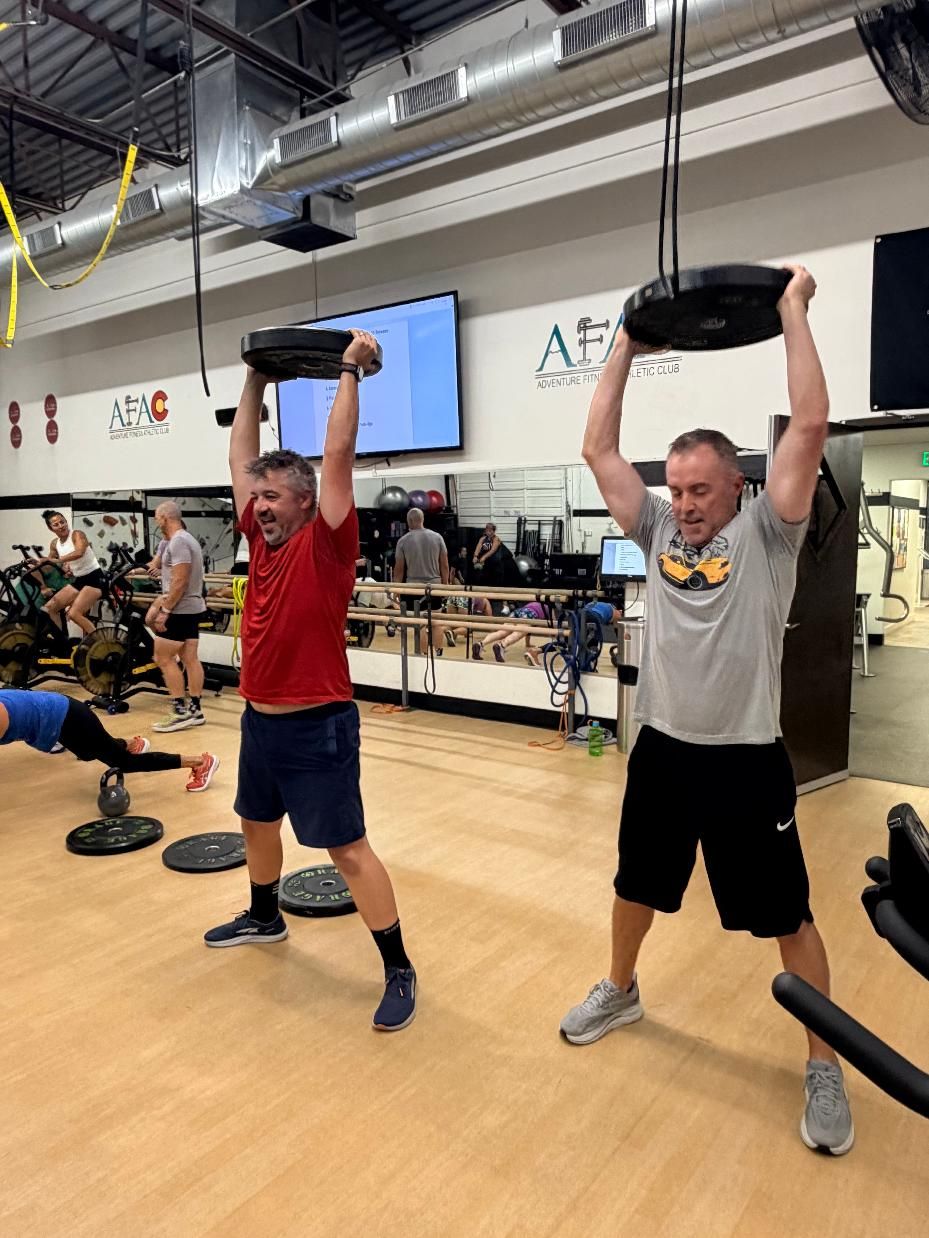
At AFAC gym in Thornton, CO, you can experience this approach in classes such as our 5:30 a.m. Power Hour. Prefer to exercise on your own? A thoughtfully designed circuit can also bring more structure to your next gym visit.
What Is Circuit Training at the Gym?
Circuit training is a workout format in which you perform a series of exercises in a set order, usually with relatively brief breaks between stations. After completing every station, you have finished one round. You can then rest and repeat the sequence.
A circuit might include squats, rows, push-ups, a core exercise, and a cardio station. Some circuits use only resistance exercises; others alternate strength movements with activities such as cycling or rowing. The defining feature is how the exercises are organized, rather than a particular piece of equipment.
There is no required number of stations. Four to eight can be a manageable starting point, while a longer circuit might have 10 or more. You might perform 10–15 repetitions at a strength station or work for a timed interval before moving on.
Alternating muscle groups helps keep the workout moving. For example, following a lower-body exercise with an upper-body movement gives your legs a break while you continue training. However, short rest does not mean you should rush. Allow time to adjust equipment, recover your breathing, and begin the next exercise with good technique.
Depending on the number of stations and rounds, a circuit can fit into a short gym visit or become the main portion of an hour-long session.
What Are the Benefits of Circuit Training?
Circuit training offers plenty of flexibility, but its benefits depend on the program you follow and how consistently you train. Research on resistance-based circuits supports improvements in strength, cardiorespiratory fitness, and body composition. Results vary with the participants and workout design, as no single circuit delivers every possible benefit equally.
Increase Strength
Resistance stations give your muscles something to work against, whether that is your body weight, a dumbbell, or a machine. A balanced circuit can include both upper- and lower-body exercises to develop strength across major muscle groups.
Keep a record of the weights and repetitions you use. As an exercise becomes easier, a small increase in resistance or an additional controlled repetition can help you progress. If your main goal is lifting very heavy weights, you may benefit from longer rest periods and a more specialized strength program.
May Help With Weight Loss
Circuit training uses energy and can support changes in body composition. Resistance exercises also provide a reason for your body to maintain or build muscle as your fitness improves.
Still, sweating more does not automatically mean losing more body fat. Weight changes depend on your overall eating patterns, activity level, and other individual factors. Think of circuits as one useful part of a sustainable routine rather than a shortcut to a particular number on the scale.
Make Your Workout More Time Efficient
Planning your stations in advance reduces time spent deciding what to do next. Alternating movements can also shorten the downtime between sets while allowing the muscles you just trained to recover.
For a busy schedule, that structure is valuable. You can choose fewer stations or complete fewer rounds when time is tight. Preserve your warm-up and necessary recovery instead of trying to squeeze in extra work by racing through every repetition.
Improve Cardiovascular Fitness and Support Heart Health
Circuits that sustain an appropriate effort can challenge your cardiovascular system alongside your muscles. Over time, resistance-based circuit training can improve aerobic fitness.
Regular physical activity also supports heart health, with benefits that can include healthier blood pressure and a lower risk of cardiovascular disease. An elevated heart rate during one session is a response to effort; lasting benefits come from repeated, appropriate training.
Train Your Entire Body for Everyday Movement
An intentionally balanced circuit can include squatting, hinging at the hips, pushing, pulling, and stabilizing your trunk. Those patterns relate to everyday tasks such as standing from a chair, carrying groceries, and lifting an object from the floor.
Exercise selection matters. A circuit made entirely of leg exercises does not become a full-body workout just because it makes you breathless. Include movements for different body regions and choose versions you can perform comfortably.
Make the Workout Your Own
You can adjust a circuit’s equipment, duration, resistance, and impact level. If jumping jacks bother your joints, step jacks or a stationary bike may suit you better. If floor exercises are difficult, an elevated push-up or standing resistance exercise may be more accessible.
You can also change the emphasis. A circuit with more resistance stations may prioritize muscular fitness, while one with longer cardio stations can place more emphasis on endurance. Keep enough consistency to track progress, then introduce variety when it serves your goals.
Give Your Mood a Lift
The benefits of movement extend beyond physical fitness. Physical activity can reduce short-term feelings of anxiety, and regular exercise can support sleep and mental well-being.
A circuit also offers a clear task to focus on: finish the current station, recover, and move to the next. Completing a manageable workout may leave you feeling more accomplished. You do not need an exhausting, high-intensity session to benefit from being active.
How Can I Sign Up for Circuit Training at AFAC Gym?
If you enjoy coaching and the energy of a group, try a class that incorporates circuit training at AFAC gym. Our 5:30 a.m. Power Hour is one option for getting your workout underway early.
Visit our class schedule page to browse classes and reserve your spot, or book through MINDBODY. Check the live schedule for current times and availability.
Fitness classes are included with our Gold gym memberships. Silver members and nonmembers can participate for a $25 class fee. Contact our team if you have questions about your membership or which class would be a good starting point.
Taking a class gives you a planned workout and instructor guidance. Let your instructor know if you’re new to circuits or need an exercise modification so you can choose an appropriate starting level.
How Can I Circuit Train Without a Class?
You can build your own circuit, adapt a reputable workout, or ask a personal trainer for a plan. Start with your goal and experience level, then choose exercises you already know how to perform. A trainer can help you identify missing movement patterns and select manageable weights.
For a general fitness circuit, consider these steps:
1. Choose a balanced set of stations. Include lower-body work, an upper-body push, an upper-body pull, a core movement, and a cardio activity.
2. Set a manageable workload. Around 10–15 controlled repetitions can work for many resistance exercises. Timed stations of roughly 30–60 seconds are another option. Some programs use longer intervals, but the duration should match the movement and your ability to maintain form.
3. Allow recovery between stations. Start with about 20–45 seconds if needed, and take longer when your breathing or technique requires it. A circuit remains a circuit even when you add rest.
4. Choose your rounds. Begin with one or two rounds if you are new to the format. Build toward three as you become comfortable, allowing enough recovery between rounds to repeat the movements well.
5. Progress gradually. Increase a weight, add a round, or adjust a work interval rather than making every part harder at once.
Warm up before you start, using easy movement and lighter practice repetitions of your planned exercises. Finish with a few minutes of gradually easier activity.
Keep gym logistics in mind, too. Choose stations close together when possible and have alternatives ready if equipment is occupied. Avoid reserving several machines at once. A compact circuit can be easier to manage during a busy gym visit.
What’s an Example of a Circuit Training Workout at the Gym?
The following is an illustrative general fitness circuit, rather than a specific AFAC gym class workout. Use it as a starting point to discuss with a trainer, particularly if any movement is unfamiliar.
Warm up for about five minutes, then perform the stations in order. Choose resistance that allows controlled movement with a few good repetitions still possible when the set ends.
Take approximately 20–45 seconds between stations as needed and one to two minutes after the full round. Complete two rounds initially, progressing to three if you can maintain good form. Allow roughly 25–35 minutes for the warm-up, circuit, recovery, and a brief cooldown, depending on your pace.
For the cardio station, choose an effort at which you can still speak in sentences. For strength stations, stop the set if you cannot complete the movement cleanly. If the next round feels much harder, reduce the resistance or repetitions instead of forcing yourself to match the first round.
What’s the Difference Between Circuit Training and HIIT?
Circuit training describes the sequence of exercises. High-intensity interval training, or HIIT, describes a pattern of hard work intervals alternating with recovery. They can overlap, but they are not interchangeable.
A circuit can remain moderate throughout, with brief breaks as you rotate through different movements. HIIT requires periods of distinctly high effort, followed by enough recovery to repeat those efforts. For example, alternating hard cycling intervals with easy pedaling can be HIIT without involving multiple exercise stations.
Feature
Circuit training
HIIT
Main organizing principle
A sequence of exercise stations
Hard intervals alternating with recovery
Exercise choices
Often several different movements
May use one activity or several
Intensity
Can range from easy to vigorous
Work intervals are deliberately high intensity
Recovery
Adjusted to the exercises and participant
A planned part of the interval pattern
A circuit becomes a HIIT-style workout when its work intervals reach high intensity and its recovery periods support that approach. Simply setting a timer or getting sweaty does not make a workout HIIT.
Who Is Circuit Training Suitable for?
Circuit training can be adapted for many people, including beginners, experienced gym members, and older adults. The right version depends on your current fitness, movement skills, health, and goals.
Beginners may do best with a few familiar movements, lighter resistance, and generous breaks. More experienced exercisers can increase the challenge through resistance or additional rounds. People who prefer lower-impact exercise can use machines, cycling, and controlled strength movements without adding jumps.
If you have an injury, a chronic condition, or symptoms that affect exercise, ask a qualified healthcare professional about appropriate activity and discuss modifications with your instructor or trainer. Stop exercising if you develop chest pain, dizziness, or unusual shortness of breath.
The aim is a challenge you can recover from and repeat consistently. Finishing a circuit does not require pushing through pain or competing with the person at the next station.
What Are Some Common Circuit Training Exercises?
Circuits can incorporate a wide range of movements, from machines and free weights to body-weight exercises. These five are common options, but several involve impact or substantial body-weight support. Choose the version that fits your abilities, and balance them with other movements rather than assuming they make a complete program by themselves.
Burpees
A burpee moves from standing to a plank and back to standing, often adding a push-up and a jump. Begin by bending your knees and placing your hands on the floor. Step or jump your feet back into a plank, keeping your trunk controlled. Return your feet toward your hands and stand; add a small jump only if you can land comfortably.
Burpees involve multiple muscle groups and can quickly raise the workout’s intensity. For an easier version, support your hands on a secure elevated surface, step your feet back one at a time, and omit the push-up and jump.
Jumping Jacks
Start upright with your feet together and arms at your sides. Jump your feet apart as you raise your arms, then return to the starting position. Keep your knees soft and land gently; your hands do not need to touch overhead.
Jumping jacks are primarily a cardio movement involving coordinated arm and leg motion. Reduce impact with step jacks: step one foot out as you raise your arms, return to the middle, and switch sides.
Mountain Climbers
Begin in a high plank with your hands beneath your shoulders. Bring one knee toward your chest, return that foot, and alternate sides while keeping your hips relatively steady.
Mountain climbers challenge trunk stability, shoulder support, and hip movement. Start slowly rather than trying to drive your knees forward as fast as possible. Placing your hands on a secure bench can reduce the demand compared with the floor version.
Squat Jumps
Lower into a comfortable squat, then extend through your hips, knees, and ankles to leave the floor. Land softly with your knees bending to absorb the impact, regain control, and reset before the next repetition.
Squat jumps develop lower-body power and require sound landing mechanics. Keep sets short enough to preserve landing quality, and stop when fatigue makes your landings awkward. Regular squats or squats followed by a calf raise are alternatives when jumping is unsuitable.
Walking Lunges
Step forward and bend both knees to lower your body under control. Keep your torso upright and your front foot planted, then drive through that foot to rise and take the next step with the other leg. Your back knee can approach the floor without touching it.
Walking lunges challenge the thighs, glutes, balance, and trunk control. Begin with body weight and comfortable steps. If balance is a concern, try a supported stationary split squat before progressing to walking lunges.
Make the Rounds and Make Time for Yourself at AFAC Gym
A busy schedule does not have to keep you from a rewarding workout. Circuit training gives you a flexible structure for combining strength work and cardio while keeping your next exercise clear.
At AFAC gym in Thornton, CO, you can explore circuit training in a class or work with a personal trainer to develop a routine that suits you. Try Power Hour, browse our current class schedule, or contact AFAC gym for help getting started.
Choose a manageable circuit, give each movement your attention, and build from there. Your next round could be the start of a gym routine that fits more comfortably into your life.
If you’re not a member yet, we hope you’ll stop by AFAC gym today to speak to our team about our affordable memberships and personal trainers. AFAC gym is committed to supporting your health and wellness efforts, so you’ll see the results you’re working so hard for. That’s why we were voted the best gym in Thornton, Colorado, and have hundreds of 5-star reviews.