
The Foundations of Form When You Exercise at AFAC Gym
Strength training offers far more than bigger muscles. A well-designed workout program can improve functional strength, support a healthy metabolism, increase bone density, enhance posture, strengthen your cardiovascular system, and even boost your mental well-being. However, there is one critical factor that determines whether you fully experience those benefits: proper exercise form.
Every repetition you perform teaches your body a movement pattern. When that pattern is efficient and biomechanically sound, you build strength safely and effectively. When it’s not, you may place unnecessary stress on your joints, muscles, and connective tissues while limiting your results.
Why Is Proper Workout Form So Important?
Think back to childhood when climbing, running, jumping, and playing seemed effortless. Most people moved naturally and without much thought. As we age, however, our bodies become less forgiving. Tight muscles, sedentary habits, previous injuries, and decreased mobility can all affect the way we move.
That’s why proper exercise form becomes increasingly important over time.
Good form helps ensure the right muscles are performing the work while allowing your joints to move through safe and efficient ranges of motion. It creates a strong foundation for building strength, improving athletic performance, and reducing injury risk.
Conversely, poor technique can cause problems that may not appear immediately. Repeated movement errors can gradually lead to muscle imbalances, joint irritation, reduced mobility, and chronic pain.
Injury Prevention: Protecting Your Body for the Long Haul
Many exercise-related injuries don’t happen because of one catastrophic mistake. Instead, they often develop from repeated movement patterns performed incorrectly over time.
For example, repeatedly rounding your lower back during deadlifts or allowing your knees to collapse inward during squats can create excessive stress on joints, ligaments, and tendons. These small movement flaws may seem insignificant initially, but they can accumulate into more serious issues.
Proper form distributes force evenly throughout the body and allows muscles to absorb the workload they are designed to handle. This significantly reduces unnecessary strain and helps keep you active and healthy for years to come.
Maximizing Strength and Muscle Development
Proper technique doesn’t just keep you safe, it also helps you achieve better results.
When an exercise is performed correctly, the intended muscles receive the majority of the training stimulus. For example, a controlled bicep curl challenges the biceps throughout the movement. If you swing the weight and use momentum, other muscle groups begin assisting, reducing the effectiveness of the exercise.
The same principle applies to every lift. Proper form helps ensure that your effort is directed exactly where it should be, allowing you to build strength more efficiently and make consistent progress toward your goals.
Better Performance in Every Workout
Good form improves movement efficiency. Efficient movement requires less wasted energy, better coordination, and greater control. As a result, you’ll often find that you can lift more effectively, perform more repetitions, and maintain higher workout quality over time.
Safe movement and effective movement are inseparable. The better your form, the better your results.
The Fundamentals of Proper Form
Many people assume proper form simply means standing correctly or lifting with good posture. In reality, several factors contribute to proper technique.
Posture and Position
Every exercise begins with proper alignment.
Maintaining a neutral spine, stable shoulders, and balanced pelvic position allows your body to move efficiently while minimizing stress on vulnerable structures.
During exercises such as deadlifts, squats, and overhead presses, maintaining proper posture helps distribute loads appropriately throughout the body. When posture breaks down, certain joints and tissues may be forced to compensate, increasing injury risk.
Core Engagement
Your core serves as the body’s central stabilizing system.
A properly engaged core helps maintain spinal alignment, improves balance, and allows force to transfer efficiently between the upper and lower body. Whether you’re performing a squat, carrying dumbbells, or pressing weight overhead, core engagement helps create stability and control.
Think of your core as a built-in weightlifting belt that helps protect your spine during movement.
Foot Placement
Your feet create the foundation for every exercise.
Proper foot positioning contributes to balance, stability, and force production. Even small adjustments in stance width or foot angle can dramatically affect how an exercise feels and performs.
For example, improper foot placement during squats or deadlifts may alter knee tracking, create hip compensation patterns, or place unnecessary stress on the lower back.
Joint Movement
Every exercise has an optimal movement pattern.
When joints move in proper sequence, muscles share the workload effectively. When movement becomes uncoordinated, certain structures may experience excessive strain.
Learning how your hips, knees, shoulders, and ankles should move during each exercise helps improve performance while reducing wear and tear on the body.
Breathing
Breathing is one of the most overlooked components of exercise technique.
Proper breathing helps stabilize the core, supports the spine, and improves force production during strength training. A simple guideline for most exercises is to inhale during the lowering phase and exhale during the effort phase.
For heavier lifts, many experienced lifters use breathing strategies that create intra-abdominal pressure, providing additional support for the spine.
Tempo
How fast you move matters.
Rushing through repetitions often leads to momentum-driven movement and reduced muscle engagement. Moving with control allows you to maintain tension, improve technique, and maximize training effectiveness.
For most strength-training exercises, a slower lowering phase combined with a controlled lifting phase provides excellent results while helping reinforce proper movement patterns.
Check Your Technique
Many people learn exercises by watching friends, social media videos, or other gym members. While this can provide ideas, it doesn’t always guarantee safe technique.
If you’re new to strength training, consider working with a qualified personal trainer who can teach proper mechanics from the beginning. Even experienced exercisers benefit from periodic coaching sessions to identify movement flaws and refine technique.
Sometimes a small adjustment in body position can dramatically improve both safety and performance.
Do Gym Machines Help You Maintain Better Form Than Free Weights?
One of the most common questions gym-goers ask is whether machines or free weights are better for maintaining proper form. The truth is that both have their place in a well-rounded fitness program, and each offers unique advantages depending on your experience level, goals, and physical limitations.
The Benefits of Weight Machines
Weight machines are often an excellent starting point for beginners because they guide your body through a predetermined range of motion. Unlike free weights, where you must control the weight in multiple directions, machines provide stability and support that can make learning movement patterns easier.
For example, a Smith machine allows the barbell to travel on a fixed track, helping users maintain balance while performing exercises such as squats, lunges, and bench presses. Similarly, a hack squat machine supports the upper body while guiding the movement pattern, allowing lifters to focus on building leg strength without worrying as much about balance and coordination.
Machines can also be beneficial for individuals recovering from injuries or those who have mobility limitations. Because the movement path is controlled, there is often less demand on stabilizing muscles, which can reduce the risk of compensatory movements that may contribute to discomfort or injury.
Another advantage of machines is their ability to isolate specific muscle groups. Leg extensions, hamstring curls, chest presses, and lat pulldowns allow exercisers to target individual muscles with greater precision, making them useful for both beginners and advanced athletes.
The Advantages of Free Weights
While machines can help reinforce proper movement patterns, free weights offer benefits that machines simply cannot replicate.
Exercises performed with barbells, dumbbells, kettlebells, and other free weights require the body to stabilize the load throughout the entire movement. This recruits additional muscles, particularly the core and smaller stabilizing muscles around the joints.
For example, performing a squat with a barbell requires coordination between the legs, hips, core, and upper back. A dumbbell bench press challenges shoulder stability and balance in ways a machine chest press cannot. These additional demands often translate more effectively to real-world activities and sports performance.
Free weights also allow your body to move more naturally. Because every person has different limb lengths, mobility levels, and biomechanics, a fixed machine path may not perfectly match your body’s ideal movement pattern. Free weights allow you to adjust your positioning and range of motion based on your unique anatomy.
When Machines Can Actually Encourage Poor Form
Although machines are often viewed as “safer,” they are not foolproof. Many people assume that simply sitting on a machine guarantees proper technique, but poor positioning can still lead to problems.
For example, using excessive weight on a hack squat machine can cause the lower back to round at the bottom of the movement. Improper seat positioning on a chest press machine can place unnecessary stress on the shoulders. Even a Smith machine squat can encourage unnatural movement patterns if the lifter’s stance and body mechanics are not properly aligned with the bar path.
In other words, machines may reduce some technical demands, but proper setup and execution still matter.
The Best Approach: Use Both
Rather than viewing machines and free weights as competitors, it’s better to think of them as complementary tools.
Beginners may benefit from learning basic movement patterns on machines before progressing to more challenging free-weight exercises. Experienced lifters can use machines to safely add training volume, isolate muscle groups, or continue training around injuries.
At AFAC gym, we encourage members to use a combination of both. Free weights help build functional strength, balance, and coordination, while machines can provide additional support, muscle isolation, and confidence as you develop your skills.
Ultimately, neither machines nor free weights automatically guarantee good form. The key is understanding proper technique, choosing appropriate resistance, and performing every exercise with control and intention. Whether you’re using a Smith machine, hack squat, cable machine, dumbbells, or a barbell, good form will always be the foundation of a safe and effective workout.
Weight Training Do’s
Lift an Appropriate Amount of Weight
Choose a weight that allows you to complete your repetitions while maintaining excellent form. As your strength improves, gradually increase resistance while continuing to prioritize technique.
Use Proper Form Every Time
Consistency matters. Practice correct movement patterns on every repetition, from your first warm-up set to your final working set.
If your form deteriorates, reduce the weight or the number of repetitions.
Breathe Properly
Avoid holding your breath unnecessarily. Develop a consistent breathing pattern that supports stability and control throughout each movement.
Train for Balance
A well-rounded program should target all major muscle groups. Strengthening opposing muscle groups helps improve posture, movement quality, and overall performance.
Prioritize Recovery
Allow adequate recovery time between training sessions. Muscles need time to repair and adapt in order to grow stronger.
Weight Training Don’ts
Don’t Skip Your Warm-Up
Cold muscles and stiff joints are more susceptible to injury. Spend several minutes increasing your heart rate and preparing your body for movement before lifting.
Don’t Rush Repetitions
Using momentum reduces muscle activation and often leads to technical breakdowns. Focus on controlled movement throughout every set.
Don’t Overtrain
More isn’t always better. Excessive volume without adequate recovery can increase injury risk and hinder progress.
Don’t Ignore Pain
Muscle fatigue and exertion are normal. Sharp, sudden, or persistent pain is not. If something hurts, stop and evaluate the situation before continuing.
Don’t Neglect Proper Footwear
Supportive athletic shoes provide stability, traction, and protection during workouts.
Form to Follow During Foundational Lifts
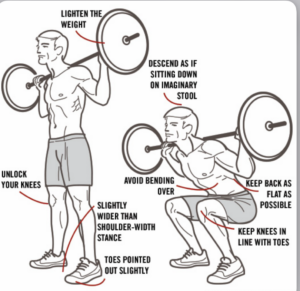
Squat: The Foundation of Lower Body Strength
The squat develops the quadriceps, glutes, hamstrings, and core.
Key points include maintaining a neutral spine, keeping the chest proud, tracking the knees in line with the feet, and driving evenly through the floor during the ascent. Focus on moving with control rather than rushing through repetitions.
Deadlift: Building Total-Body Power
The deadlift is one of the most effective strength-building exercises available.
Start with the bar close to your body, maintain a flat back, engage your core, and drive through the floor with your legs. The bar should travel in a straight path throughout the movement.
A properly executed deadlift strengthens the posterior chain while teaching efficient hip hinging mechanics.
Bench Press: Developing Upper Body Strength
The bench press targets the chest, shoulders, and triceps.
Keep your feet planted firmly, maintain shoulder stability by retracting your shoulder blades, and lower the bar with control. Avoid flaring the elbows excessively or bouncing the bar off your chest.
Overhead Press: Strengthening the Shoulders and Core
The overhead press develops shoulder strength while challenging full-body stability.
Maintain a strong core, avoid excessive back arching, and press the weight directly overhead. Lower the weight under control and maintain proper posture throughout the movement.
Self-Correcting Your Form at the Gym
Avoid the Ego Lift
One of the most common mistakes in the gym is choosing a weight that’s too heavy.
When load exceeds your ability to control the movement, technique often deteriorates. True progress comes from mastering movement quality before chasing heavier numbers.
Recognize Warning Signs
Your body often tells you when something isn’t right.
Watch for signs such as:
- Sharp or unusual pain
- Excessive shaking
- Uneven movement patterns
- Loss of posture
- Inability to control the weight
When these signs appear, it’s time to reassess your technique.
Practical Ways to Improve Form
- Record your lifts for review.
- Use lighter warm-up sets to rehearse technique.
- Focus on one or two key coaching cues.
- Work with a qualified trainer for personalized feedback.
Small adjustments often create significant improvements.
Tailoring Gym Form Techniques to Your Body
Understanding Individual Differences
No two people are built exactly alike.
Differences in limb length, torso proportions, mobility, and flexibility can affect how exercises should be performed. What works perfectly for one lifter may not be ideal for another.
Improve Mobility and Flexibility
Movement limitations can affect exercise quality.
Regular mobility work can improve squat depth, deadlift positioning, overhead mobility, and overall movement efficiency. Dynamic warm-ups and targeted flexibility training can help address common restrictions.
Adapt for Injuries and Limitations
Previous injuries may require exercise modifications.
Alternative movement variations, adjusted ranges of motion, or specialized coaching can help individuals continue building strength safely while respecting their body’s unique needs.
Other Ways to Support Your Gym Form
Warm Up and Cool Down Properly
A quality workout begins before the first set.
Dynamic warm-ups prepare muscles and joints for movement, while post-workout stretching helps support recovery and maintain flexibility.
Support Performance Through Nutrition and Hydration
Your body performs best when properly fueled.
Adequate hydration helps maintain focus and physical performance, while balanced nutrition provides the energy and nutrients necessary for recovery and muscle growth.
Prioritize Sleep and Recovery
Recovery is where progress happens.
Strength gains occur when the body repairs itself after training. Consistently getting quality sleep and scheduling recovery days helps improve performance, reduce injury risk, and support long-term success.
Lift Smarter, Move Better, Stay Stronger at AFAC Gym
Perfect form isn’t about looking impressive in the gym. It’s about creating a strong foundation that allows you to train safely, consistently, and effectively for years to come.
Every exercise you perform is an opportunity to reinforce healthy movement patterns, build strength, and improve your overall quality of life. By focusing on proper posture, controlled movement, core engagement, breathing, and technique, you’ll not only reduce your risk of injury but also maximize the results of every workout.
If you’re unsure whether your form is helping or hurting your progress, the experienced trainers at AFAC gym in Thornton, Colorado, can help. From beginners learning the basics to seasoned lifters refining advanced techniques, professional guidance can provide the confidence and knowledge needed to reach your goals safely.
Remember: the strongest athletes aren’t always the ones lifting the most weight. They’re the ones who have mastered the fundamentals and continue to move with purpose, precision, and control.
If you’re not a member yet, we hope you’ll visit AFAC gym today to speak to our team about our affordable memberships and personal trainers. AFAC gym is committed to supporting your health and wellness efforts, so you’ll see the results you’re working so hard for. That’s why we were voted the best gym in Thornton, Colorado, and have hundreds of 5-star reviews.
To learn more about our top-rated gym and our incredible array of strength training and cardio equipment — as well as our unique offerings and amenities like daily group classes, cryotherapy, InBody 770 assessments, hydro massage, personal trainers, and our rock climbing wall and cave — please contact us or visit for a personalized tour. Our team will be happy to help you. For more information and assistance, you can also contact our gym owner, Susan, at 720-849-0245 or susan@adventurefitness.club.