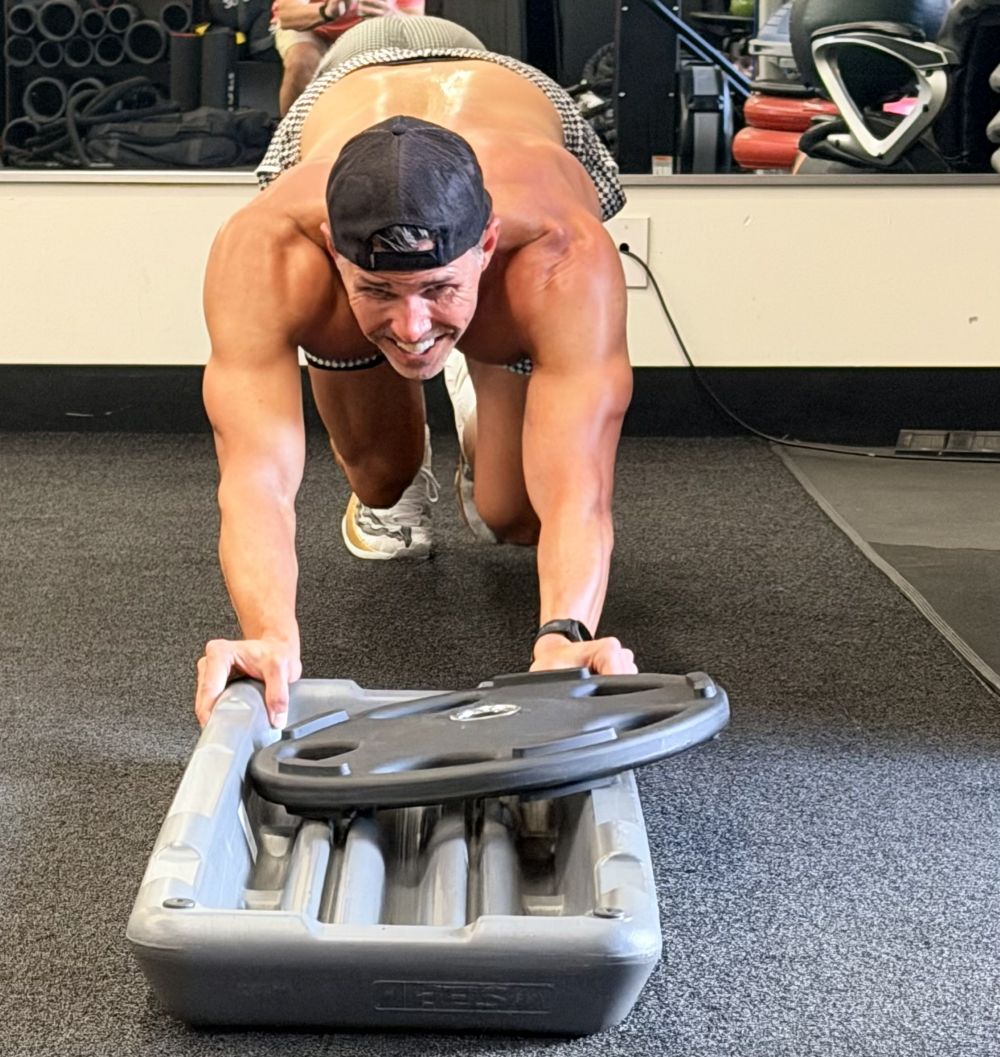
If you want to build muscle, the flood of workout plans, nutrition rules, and supplement recommendations you see on social media can make the process seem far more complicated than it needs to be. Fortunately, the fundamentals of muscle growth are well established. You need resistance training that challenges your muscles, enough protein to support new tissue, and sufficient recovery to adapt between workouts.
That doesn’t necessarily mean doing more exercises, spending hours at the gym, or leaving every session completely exhausted. In fact, a focused muscle building program you can perform consistently is usually more productive than an extreme routine you cannot sustain. Whether you are new to strength training or ready to move beyond a plateau, the following principles can help you train with greater purpose and make your time at AFAC gym in Thornton, Colorado, count.
Lift Close to Failure
Muscles grow in response to repeated resistance that creates high levels of mechanical tension. In practical terms, a working set should become challenging enough that the final repetitions demand real effort. You may notice that the weight moves more slowly as fatigue builds, even though you’re still trying to lift it with intent.
You do not, however, need to take every set to complete muscular failure, the point at which you cannot pe
rform another repetition with acceptable form. Research has not shown that reaching failure on every set is required for muscle growth. Frequently doing so can create unnecessary fatigue, extend recovery time, and make the rest of your workout less productive.
For many exercises, finishing a set when you believe you could complete another two or three good repetitions is a useful target. This is often described as leaving two or three “reps in reserve.” Beginners may benefit from staying a little farther from failure while learning technique. Experienced lifters may occasionally train closer to failure, particularly on stable machine or isolation exercises where the consequences of a failed repetition are easier to control.
The key is honest effort. If you finish a set and could easily perform many more repetitions, the weight may be too light, the set may be too short, or both. Your final reps should feel demanding without turning into uncontrolled, painful, or poorly executed movements.
Challenge Yourself With Productive Rep Ranges
Heavy weights can be extremely useful for building strength and muscle, but the idea that only low-repetition sets build muscle is too restrictive. Research indicates that muscles can grow across a broad spectrum of loads when sets are performed with sufficient effort. Heavier sets tend to be more efficient because they reach challenging repetitions sooner, while lighter sets generally require more repetitions and must be taken closer to failure.
For compound lifts, a moderate range of roughly 5 to 10 repetitions often provides a practical balance of mechanical tension, technique, and efficiency. Isolation exercises and machine movements may feel better in somewhat higher ranges, such as 8 to 15 repetitions or more. Very heavy sets of 3 to 5 repetitions can help develop strength, but they require greater technical control and may place more stress on joints and connective tissues.
Instead of forcing every exercise into one range, choose a load that fits the movement and your experience. A challenging set of dumbbell presses may use fewer repetitions than a set of cable lateral raises. Both can contribute to muscle growth when performed with control and appropriate effort.
Commit to Progressive Overload
Your body adapts to the demands you place on it. A workout that is challenging today may become comfortable after several weeks of consistent training. To keep building muscle, you must gradually give your muscles a reason to adapt again. This process is called progressive overload.
Adding weight is one way to progress, but it is not the only way. You can also:
Perform one or two additional repetitions with the same weight.
Add a set when more weekly training volume is appropriate.
Improve your range of motion.
Use better control and eliminate momentum.
Perform the same work with more consistent technique.
Increase the difficulty of an exercise variation.
Keep a training log that records your exercises, weights, sets, and repetitions. You may also note how many reps you had left at the end of each set. These records make it easier to identify genuine improvement and decide when to increase the challenge.
Progress does not need to occur during every workout. Muscle growth is a long-term process, and performance naturally fluctuates with sleep, stress, nutrition, and other factors. Look for an upward trend over several weeks rather than expecting a personal record every time you train.
Use Good Form
How you lift matters just as much as how much you lift. Good technique helps direct the resistance toward the muscles you intend to train while limiting unnecessary stress on your joints and connective tissues. Poor form may allow you to move more weight, but it can reduce the value of the exercise if momentum or other muscle groups take over.
Use a controlled range of motion that suits your mobility and the exercise. Lower the weight deliberately, maintain a stable position, and avoid rushing simply to finish the set. A controlled lowering phase of approximately two seconds can be a helpful cue, but there is no need to count every second rigidly. The goal is to remain in control, not to make every repetition artificially slow.
Stop the set when your technique begins to change substantially. Muscle fatigue is productive; sharp pain, loss of control, and joint discomfort are warning signs. If you are unsure about an exercise, reduce the weight and practice the movement before increasing the load. Guidance from a qualified personal trainer can also help you establish safe, repeatable technique.
Eat Enough Protein
Resistance training provides the stimulus for muscle growth, while nutrition supplies the raw materials. Protein is particularly important because it provides amino acids the body uses to repair and build muscle tissue.
A practical daily target for many people who lift weights is approximately 0.7 to 1 gram of protein per pound of body weight. For a 180-pound adult, that equals roughly 125 to 180 grams per day. Individual needs vary, and more protein is not automatically better. People with kidney disease or other medical conditions should discuss major dietary changes with a qualified healthcare professional.
Try to distribute protein across several meals rather than consuming most of it at once. Foods such as eggs, poultry, fish, lean meat, Greek yogurt, cottage cheese, tofu, tempeh, beans, lentils, and high-protein grains can all contribute.
Total energy intake matters, too. Except in some circumstances, such as beginners or people with higher levels of body fat, adding substantial muscle while consistently under-eating can be difficult. A modest calorie surplus may support growth while limiting unnecessary fat gain. There is no universal formula, so monitor your strength, body measurements, energy, and body-weight trend, then adjust gradually.
Don’t neglect healthy carbohydrates and fats. Carbohydrates help fuel hard training and replenish muscle glycogen, while dietary fats support overall health and normal hormone function. Rather than chasing a rigid macro split, build meals around protein, nutrient-rich carbohydrates, healthy fats, fruits, vegetables, and adequate hydration.
Use Supplements if You Need Them
Supplements are optional tools, not the foundation of a muscle-building plan. Most of your nutrition should come from a varied diet whenever possible, but a few well-chosen products can add convenience or support performance.
Protein powder is useful when food alone makes it difficult to reach your daily protein target. Whey and casein are common choices, while soy, pea, and blended plant proteins offer dairy-free alternatives. A shake is not inherently more muscle-building than a protein-rich meal, it’s simply portable, measurable, and easy to prepare.
Creatine monohydrate is one of the most extensively studied sports supplements. Regular use can improve performance during repeated bouts of high-intensity activity and may support greater strength and lean-mass gains alongside resistance training. A common maintenance amount is 3 to 5 grams per day. A loading phase can saturate muscle stores more quickly, but it’s not required. Some people experience a small increase in body weight from additional water stored in muscle.
Choose products that have been independently tested when possible, and speak with a healthcare professional before taking a new supplement if you use medication, are pregnant or nursing, have a medical condition, or have concerns about an ingredient. No powder or pill can compensate for inconsistent workouts, insufficient calories, or poor sleep.
Sleep and Recover
Training challenges muscle. Recovery allows the body to repair and adapt. Treating rest as optional can slow progress, especially when fatigue reduces workout performance or makes consistent training difficult.
Give a muscle group time to recover before training it hard again. Many people do well with at least one day between demanding sessions for the same muscles, although the right interval depends on workout volume, training experience, sleep, nutrition, and individual recovery. Mild soreness can be normal, but extreme soreness is not proof of a better workout and should not be the goal.
Rest days do not have to mean complete inactivity. Walking, easy cycling, mobility work, and gentle yoga can keep you moving without adding another strenuous training session. Massage, cryotherapy, and other recovery services may help you relax or temporarily reduce soreness, but they cannot replace sleep, nutrition, and sensible programming.
Most adults should aim for at least seven hours of sleep per night, and some active people perform better with more. A consistent sleep schedule, a dark and quiet bedroom, and reduced late-night screen time may improve sleep quality. When sleep and stress are chronically poor, training quality, motivation, and recovery can all suffer.
Think of it this way: your workout sends the signal, but recovery gives your body the opportunity to respond.
Do Full-Body Workouts
Body-part splits can build muscle, but they are not the only effective option. Research suggests that full-body and split routines can produce similar muscle and strength gains when total weekly training volume is comparable. The best structure is the one that allows you to train each major muscle group regularly, recover adequately, and remain consistent.
For busy professionals, parents, and anyone who can strength train only two or three days per week, full-body workouts are especially practical. Each session can include a lower-body push, a hip-dominant movement, an upper-body push, an upper-body pull, and selected accessory work. This approach spreads the work across the week and prevents one missed session from eliminating all training for a particular muscle group.
A three-day schedule might look like this:
Monday: Full-body workout
Wednesday: Full-body workout
Friday or Saturday: Full-body workout
The exercises don’t need to be identical each day. You might use a squat variation in one workout, a leg press in another, and a split squat in the third. Adjust the number of sets so you can challenge each muscle without making every session excessively long.
If you enjoy a split routine and can maintain it, there’s no need to abandon it. Consistency, weekly volume, progressive overload, and recovery matter more than the name of the program.
Prioritize Compound Lifts, but Add Isolation Exercises, Too
Compound exercises involve multiple joints and train several muscle groups at once. Squats, deadlift variations, presses, rows, pull-ups, and pulldowns can form an efficient foundation because they allow you to train a large amount of muscle in relatively little time.
These exercises should not be chosen because of a supposed short-lived hormone “spike.” Their real advantage is practical: they are scalable, time-efficient, and effective at developing coordinated strength across multiple muscles.
Isolation exercises focus more directly on one joint action or muscle group. Biceps curls, triceps extensions, lateral raises, leg curls, calf raises, and leg extensions can add targeted volume without requiring the same whole-body effort as a heavy compound lift. They are helpful for addressing weak points, developing smaller muscle groups, and adding work after your main movements.
A balanced session might begin with technically demanding compound exercises while you are fresh, then move to stable machines, cables, or isolation exercises. You don’t need a long list of movements. A small selection performed consistently and progressively is often enough.
Use a Variety of Equipment
You can build muscle with barbells, dumbbells, machines, cables, resistance bands, or body-weight exercises. Each option has strengths, and AFAC gym gives you the freedom to choose equipment that fits your body, goals, and experience.
Barbells make it easy to load compound movements and track small increases over time.
Dumbbells allow each side to work independently and may provide a comfortable range of motion.
Cables maintain resistance through many positions and make it easy to adjust exercise angles.
Machines provide stability, which can help you focus on the target muscle and train hard without balance becoming the limiting factor.
Variety can expose muscles to different positions and resistance profiles, but changing exercises constantly makes progress difficult to measure. Keep your core movements in place long enough to improve them, often several weeks or months, then make thoughtful changes when an exercise no longer feels productive, causes discomfort, or becomes stale.
Equipment is a tool, not a ranking system. The best choice is the one that lets you train the intended muscle safely, through a useful range of motion, with enough effort to progress.
Think in Years, Not Weeks
Building meaningful muscle takes patience. Although you may notice early improvements in strength, energy, or muscle definition, developing substantial muscle mass usually takes years of consistent training, not a few weeks or months. Focus on gradual progress, celebrate small victories, and remember that every well-planned workout contributes to your long-term results.
Build Strength, Build Confidence, and Build Your Best at AFAC Gym
Building muscle doesn’t require a secret routine. It requires challenging training, measurable progress, supportive nutrition, and enough recovery to repeat the process week after week. Lift with purpose, work close enough to your limits to stimulate growth, and give your body the fuel and rest it needs.
Most importantly, choose a plan that fits your life. Two or three focused full-body sessions performed consistently will usually accomplish more than an ambitious schedule you rarely complete. Start with manageable goals, record your workouts, and celebrate improvements in strength, technique, energy, and confidence, not just changes on the scale.
Ready to put these muscle-building principles into action? Take advantage of the strength-training equipment, supportive environment, and workout options available at AFAC gym. Your strongest chapter can start with your next workout.
If you’re not a member yet, we hope you’ll visit AFAC gym today to speak to our team about our affordable memberships and personal trainers. AFAC gym is committed to supporting your health and wellness efforts, so you’ll see the results you’re working so hard for. That’s why we were voted the best gym in Thornton, Colorado, and have hundreds of 5-star reviews.