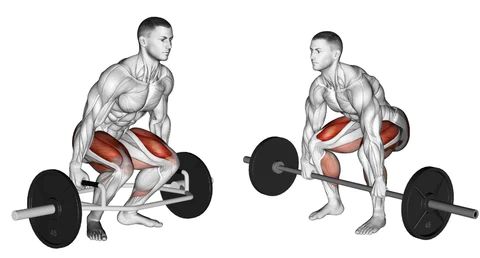
Conventional Barbell vs. Trap Bar Deadlifts at AFAC Gym
Walk into almost any serious gym, and you’ll eventually hear the debate: Should you deadlift with a straight barbell or a trap bar?
It’s a discussion that has been around for years, and for good reason. Both exercises are exceptional for building strength, increasing muscle mass, and improving athletic performance. Yet despite their similarities, they challenge your body in different ways and each has unique advantages depending on your experience, goals, mobility, and training style.
Some lifters swear by the traditional barbell deadlift because it’s the gold standard of strength training and a cornerstone of powerlifting. Others prefer the trap bar because it feels more natural, places less stress on the lower back, and often allows them to lift heavier with greater confidence.
So, which one is actually better?
The truth is there isn’t a universal winner.
Instead of asking which deadlift is superior, it’s more productive to ask which variation is better suited to your body, your goals, and your current stage of training.
At AFAC gym in Thornton, Colorado, we believe every exercise should have a purpose. Understanding the differences between these two movements can help you train smarter and stay healthier over the long term.
In this guide, we’ll break down everything you need to know about conventional and trap bar deadlifts, including:
How each lift is performed
The muscles each variation emphasizes
The benefits and limitations of both exercises
Which lift is safer for different populations
Which deadlift is best for strength, muscle growth, athletic performance, and injury prevention
By the end, you’ll have a much clearer understanding of which deadlift deserves a place in your workout, and why many experienced lifters actually benefit from incorporating both.
What Is a Trap Bar Deadlift?
A trap bar deadlift is a variation of the traditional deadlift that uses a trap bar, also known as a hex bar because of its distinctive six-sided shape.
Unlike a conventional barbell, where the weight sits entirely in front of your body, the trap bar surrounds you. You step inside the frame, grab the handles located at your sides, and lift the weight while standing in the middle of the bar. This seemingly simple design changes the mechanics of the lift in several important ways.
Most trap bars feature two handle heights:
Low handles, which position your hands at roughly the same height as a traditional barbell and create a longer range of motion.
High handles, which reduce how far you have to pull the weight from the floor and make the starting position easier for many lifters.
Because the weight is centered around your body rather than in front of it, your center of gravity remains more balanced throughout the lift. This typically allows your torso to stay more upright while still producing significant force through your hips and legs.
As a result, many people find the trap bar easier to learn than a straight-bar deadlift. Beginners often feel more stable during the movement, while experienced lifters appreciate being able to move heavy loads with less strain on the lower back.
Although the trap bar is often associated with the trapezius muscles because of its name, it’s far more versatile than that. It’s commonly used for shrugs, loaded carries, farmer’s walks, jumps, and presses, but its greatest popularity comes from its role as one of the most effective deadlift variations available.
Another advantage is the flexibility it offers. Depending on your stance, handle selection, and amount of knee bend, you can make the movement resemble either a classic hip hinge or a squat-dominant lift. This versatility allows coaches and athletes to tailor the exercise to individual needs, whether the goal is building strength, improving athletic explosiveness, or working around mobility limitations.
Muscles Worked During a Trap Bar Deadlift
One of the biggest reasons the trap bar deadlift has become so popular is that it develops strength throughout nearly the entire body. While no deadlift isolates a single muscle group, the trap bar distributes the workload slightly differently than a conventional barbell deadlift.
Because the torso stays more upright and the knees generally bend more during the movement, the trap bar shifts some of the workload toward the legs while still heavily engaging the muscles responsible for hip extension.
Glutes and Hamstrings
The glutes and hamstrings remain the primary engines behind every successful deadlift.
As you drive your hips forward to stand upright, the gluteus maximus produces the majority of the force needed to extend the hips. Meanwhile, the hamstrings assist with both hip extension and stabilizing the knee throughout the movement.
Even though the trap bar recruits the quadriceps more than a conventional deadlift, the posterior chain still performs a tremendous amount of work. Strong glutes and hamstrings are essential for producing power, protecting the knees, improving sprint speed, and supporting nearly every athletic movement involving jumping or running.
Quadriceps
This is where the trap bar begins to separate itself from the traditional deadlift.
Since you’re standing inside the bar and maintaining a more upright posture, your knees naturally travel farther forward during the setup. This increases knee flexion, allowing the quadriceps to contribute much more to lifting the weight.
The movement sometimes gets compared to a squat because of this increased leg involvement. While that’s understandable, the trap bar deadlift is still fundamentally a hip hinge. The hips continue to generate most of the force, but the quadriceps provide significantly more assistance than they do during a conventional pull.
For lifters looking to build stronger legs without abandoning deadlift training, this added quad involvement can be a major advantage.
During a trap bar deadlift, your abdominal muscles, obliques, diaphragm, and spinal stabilizers work together to create a rigid trunk that protects the spine while transferring force from the lower body to the upper body.
Because the trap bar encourages a more upright torso, many lifters report less stress on the lumbar spine compared to conventional deadlifts. However, that doesn’t mean your lower back gets a free ride. The spinal erectors still work continuously to maintain proper posture and resist spinal flexion throughout the lift.
Proper bracing remains just as important regardless of which deadlift variation you choose.
Upper Back, Grip, and Forearms
The upper body also plays an important supporting role.
The trapezius, rhomboids, rear shoulders, and lats stabilize the shoulders and help maintain proper posture while the weight moves upward.
Meanwhile, your forearms and grip muscles work continuously to prevent the handles from slipping. Since the trap bar uses a neutral grip, where your palms face each other, many lifters find it more comfortable on their wrists, elbows, and shoulders than a straight barbell.
The result is a true full-body exercise that develops strength from your feet to your hands while emphasizing the lower body more than many other compound lifts.
Benefits of a Trap Bar Deadlift
The trap bar deadlift has become a staple in strength and conditioning programs for everyone from beginners to professional athletes. While it may not replace the conventional deadlift for every lifter, it offers several advantages that make it an excellent addition to many training routines.
Its unique design changes how force is distributed throughout the body, making the movement more accessible while still allowing you to build impressive strength and power. Whether your goal is improving athletic performance, lifting heavier weights, or reducing unnecessary stress on your joints, the trap bar has a lot to offer.
Greater Flexibility in Your Lifting Position
One of the biggest advantages of the trap bar is that it accommodates a wider variety of body types and movement patterns.
Unlike a straight barbell, which requires you to keep the bar directly in front of your legs throughout the lift, the trap bar places the load around your body. This allows you to adjust your stance, torso angle, and knee bend to find a position that feels comfortable while still maintaining proper mechanics.
For taller lifters or those with long femurs, getting into a strong starting position with a conventional deadlift can sometimes be challenging. Likewise, individuals with tight hamstrings or limited hip mobility may struggle to reach the bar while keeping their back in a safe position.
The trap bar helps reduce these limitations by naturally allowing a more upright posture. If your trap bar includes both high and low handles, you also have the flexibility to choose a shorter or longer range of motion depending on your mobility, training goals, or current fitness level.
This adaptability makes the exercise suitable for a much broader range of lifters without sacrificing its effectiveness.
Often Easier on the Lower Back
Many people first try the trap bar because they’re looking for a way to continue deadlifting while minimizing stress on their lower back.
Because the weight stays closer to your body’s center of gravity, there’s generally less forward lean during the movement. This reduces the leverage acting against the lumbar spine, allowing many lifters to complete heavy pulls with less discomfort than they experience during a traditional barbell deadlift.
That doesn’t mean the trap bar eliminates the need for good technique or guarantees you’ll never experience back pain. Proper bracing, controlled movement, and appropriate weight selection are still essential.
However, for many people, including those returning from previous back issues or balancing demanding athletic training schedules, the trap bar often provides a more forgiving setup that allows them to continue building strength without placing unnecessary stress on the lower back.
A Great Option for Beginners
Learning to deadlift correctly takes practice.
A conventional deadlift requires precise positioning, good mobility, and careful coordination to keep the bar traveling efficiently from the floor to lockout. New lifters often struggle to master these details while simultaneously learning how to brace their core and hinge properly.
The trap bar simplifies many of these challenges.
Standing inside the bar naturally encourages better balance, while the neutral hand position feels more comfortable for many people. The more upright torso also makes it easier to maintain a neutral spine throughout the lift, helping beginners develop confidence as they learn proper lifting mechanics.
Instead of fighting awkward positioning, new lifters can focus on the fundamentals: creating tension, driving through the floor, maintaining good posture, and finishing each repetition under control.
Many strength coaches even use the trap bar as a stepping stone before introducing athletes to conventional barbell deadlifts.
Excellent for Athletic Performance
Athletes often train differently than powerlifters.
While maximal strength remains important, many sports also require explosive acceleration, jumping ability, quick changes of direction, and powerful lower-body force production.
The trap bar deadlift aligns well with these goals.
Its mechanics closely resemble many athletic movements, allowing athletes to generate force through both the hips and knees while maintaining a more upright posture. This makes it particularly valuable for sports like football, basketball, volleyball, soccer, baseball, and track and field, where lower-body power plays a significant role in performance.
Many collegiate and professional strength programs regularly incorporate trap bar deadlifts because they allow athletes to train explosively while managing fatigue and maintaining quality movement patterns throughout a long competitive season.
Many Lifters Can Move More Weight
It’s common for experienced lifters to discover they can lift more weight with a trap bar than they can with a straight barbell.
This isn’t because the trap bar is “cheating,” it’s simply a result of different mechanics.
The centered load, increased knee contribution, and improved leverage often allow lifters to generate more force while maintaining efficient body positioning. Many people also find the neutral grip more comfortable, allowing them to focus entirely on producing power instead of managing wrist or shoulder discomfort.
While personal records are always satisfying, it’s important to remember that trap bar and conventional deadlift numbers aren’t directly comparable. They’re different exercises that challenge your body in different ways.
Instead of worrying about which lift allows the biggest number on the plates, focus on whether you’re progressing consistently with the variation that best supports your overall training goals.
Builds Total-Body Strength
Although the trap bar shifts slightly more emphasis toward the quadriceps than a conventional deadlift, it’s still one of the most effective compound exercises you can perform.
Every repetition requires coordinated effort from the glutes, hamstrings, quadriceps, calves, spinal stabilizers, core, upper back, shoulders, forearms, and grip muscles.
Training so many muscle groups simultaneously makes the trap bar deadlift highly efficient for developing overall strength while improving movement quality and muscular coordination.
Whether you’re trying to increase athletic performance, improve general fitness, or simply become stronger in everyday life, few exercises provide as much return on your training time.
Supports Long-Term Training Consistency
Perhaps one of the most overlooked benefits of the trap bar is that it often helps people train consistently over the long haul.
Strength isn’t built during a single workout. It’s built through months and years of quality training.
If a particular exercise consistently leaves you overly fatigued, aggravates old injuries, or makes recovery difficult, it becomes harder to maintain progress. Because many lifters find the trap bar more comfortable and less technically demanding, they can often recover more quickly between workouts while continuing to train at a high level.
That doesn’t make it a “better” deadlift than the conventional version.
It simply makes it a valuable tool that allows many people to accumulate more productive training over time, and in strength training, consistency almost always beats perfection.
Drawbacks of a Trap Bar Deadlift
The trap bar deadlift offers plenty of advantages, but like any exercise, it isn’t the perfect choice for every lifter or every training goal. The same characteristics that make it more approachable and comfortable can also make it less ideal in certain situations.
Understanding these limitations can help you decide when the trap bar is the right tool, and when another variation may better support your progress.
Less Emphasis on the Posterior Chain
One of the most common criticisms of the trap bar deadlift is that it doesn’t challenge the posterior chain as aggressively as a conventional barbell deadlift.
Because the trap bar allows for a more upright torso and greater knee bend, some of the workload shifts toward the quadriceps. While your glutes and hamstrings still contribute significantly to the movement, they generally aren’t placed under quite the same demand as they are during a traditional straight-bar deadlift.
For many people, this isn’t a drawback at all. In fact, the increased contribution from the quadriceps can make the trap bar an excellent lower-body strength exercise.
However, if your primary goal is maximizing posterior chain development, particularly in the glutes, hamstrings, and spinal erectors, the conventional deadlift typically provides a more targeted training stimulus.
That’s one reason powerlifters and experienced strength athletes often continue prioritizing straight-bar deadlifts, even if they occasionally incorporate the trap bar as an accessory movement.
It Doesn’t Replace Competition Deadlifts
If you’re training for a powerlifting meet, the trap bar simply isn’t a substitute for the conventional deadlift.
Powerlifting competitions are performed with a standard straight barbell, and success depends on mastering the specific technique required for that lift. Developing efficient positioning, bar path, timing, and lockout mechanics requires consistent practice with the equipment you’ll actually use in competition.
While trap bar deadlifts can certainly improve general strength, they don’t fully replicate the demands of pulling a straight bar from the floor. The different body position, grip, and loading mechanics mean the two lifts develop overlapping, but not identical, skills.
For competitive lifters, the trap bar works best as a supplemental exercise rather than the primary focus of a deadlift program.
Different Mechanics Mean Different Skill Development
Many people describe the trap bar deadlift as feeling more natural, and for good reason. The centered load and upright posture make it easier to establish a solid starting position.
However, that also means it doesn’t teach some of the technical skills required for a conventional deadlift.
With a straight barbell, you must learn how to create tension before the lift begins, engage your lats to keep the bar close, maintain balance over the middle of your foot, and coordinate your hips and shoulders throughout the pull. These technical details are fundamental to becoming proficient with traditional deadlifts.
The trap bar requires good technique as well, but because the mechanics are more forgiving, it won’t expose movement errors in quite the same way.
For lifters whose goal is mastering classic barbell movements, relying exclusively on the trap bar may slow technical development.
It’s Easy to Become Overconfident
Because the trap bar often feels smoother and allows many people to lift heavier loads, some lifters begin adding weight too quickly.
The movement may feel easier, but it’s still a demanding compound exercise that places significant stress on the muscles, connective tissues, and nervous system.
Skipping proper warm-ups, neglecting core bracing, or chasing personal records before mastering technique can still lead to injury, even with a trap bar.
Like any strength exercise, long-term progress comes from gradually increasing weight while maintaining excellent form. The trap bar may be more forgiving than a straight barbell, but it still rewards patience, consistency, and sound training habits.
What Is a Conventional Barbell Deadlift?
Few exercises have earned the respect that the conventional barbell deadlift has in the strength training world. It’s considered one of the most effective compound lifts because it challenges nearly every major muscle group while developing raw strength, coordination, and resilience.
Along with the squat and bench press, the conventional deadlift is one of the three competitive lifts in powerlifting. But its value extends far beyond the platform. Whether you’re an athlete looking to improve performance, a recreational lifter chasing new personal records, or someone who simply wants to become stronger for everyday life, the conventional deadlift can be an incredibly effective addition to your training program.
Unlike the trap bar deadlift, where you stand inside the implement, the conventional deadlift uses a standard straight barbell positioned in front of your body. You begin with the bar over the middle of your feet, hinge at the hips, bend your knees enough to reach the bar, and grip it with your hands outside your legs. From there, you generate force through the floor, extending your knees and hips simultaneously until you’re standing tall with the bar held securely at your thighs.
While the movement appears simple, performing it well requires precise technique. Your spine must remain neutral throughout the lift, your core must stay tightly braced, and the bar should travel in a nearly vertical path close to your body from start to finish. Even small breakdowns in technique can reduce efficiency and increase unnecessary stress on the body, which is why proper coaching and consistent practice are so valuable.
A Classic Hip Hinge Movement
At its core, the conventional deadlift is a hip hinge exercise.
Rather than focusing primarily on knee extension like a squat, the deadlift emphasizes powerful hip extension. Your hips move backward during the setup before driving forcefully forward as you complete the lift. This movement pattern develops the muscles responsible for many everyday tasks and athletic actions, including lifting heavy objects, sprinting, jumping, climbing, and changing direction.
Mastering the hip hinge also improves movement quality outside the gym. Learning how to lift safely from the floor can reduce unnecessary strain during daily activities while improving overall body awareness and coordination.
A Lift That Demands Full-Body Coordination
Although the deadlift is often thought of as a lower-body exercise, it’s truly a full-body movement.
Your legs generate force from the floor, your hips provide powerful extension, your core braces to stabilize the spine, your lats keep the bar close to your body, your upper back maintains posture, and your forearms work continuously to maintain a secure grip.
Every repetition requires these muscle groups to work together efficiently. If one link in the chain is weak, the entire lift becomes less effective.
This is one of the reasons conventional deadlifts have remained a cornerstone of strength training for decades. They don’t just strengthen individual muscles, they teach your entire body to work as one coordinated unit under heavy load.
Precision Matters
One reason the conventional deadlift commands so much respect is because it’s technically demanding.
Your body proportions, including the length of your torso, arms, and legs, all influence what an efficient setup looks like. Some lifters naturally start with a more upright torso, while others require a greater forward lean due to longer legs or shorter arms. There’s no single “perfect” body position that fits everyone.
Instead, successful deadlifting is about finding the setup that allows your body to move efficiently while maintaining a stable spine and keeping the bar close throughout the lift.
Because the conventional deadlift requires greater attention to positioning than many other strength exercises, it often rewards patience and consistent practice. As technique improves, lifters typically become stronger, more efficient, and more confident under heavy loads.
For that reason, the conventional barbell deadlift remains one of the most respected, and most rewarding, lifts in strength training.
Muscles Worked During a Conventional Barbell Deadlift
The conventional barbell deadlift has earned its reputation as one of the most effective full-body strength exercises because it recruits so many muscles at once. While people often think of it as a back exercise or a leg exercise, it’s really both, and much more.
Every repetition requires your lower body to generate force, your core to stabilize your spine, your upper body to control the barbell, and your grip to keep the weight secure. Because all of these muscle groups work together, the conventional deadlift is incredibly effective for building overall strength and improving athletic performance.
However, unlike the trap bar deadlift, the conventional deadlift places a greater emphasis on the muscles along the back side of the body, often referred to as the posterior chain.
Lower Back and Core
Your lower back and core play a critical role in every conventional deadlift.
As you prepare to lift the bar from the floor, your abdominal muscles, obliques, diaphragm, and deep core stabilizers work together to create intra-abdominal pressure. This bracing helps protect your spine while allowing force generated by your legs and hips to transfer efficiently through your body.
At the same time, the spinal erectors, long muscles that run alongside your spine, contract continuously to maintain a neutral back position throughout the lift. Because the barbell begins in front of your body, these muscles must work especially hard to resist the forward pull of the weight.
This is one of the biggest differences between the conventional and trap bar deadlift. The forward position of the bar creates a longer moment arm, increasing the demand placed on the lower back.
For experienced lifters, this additional challenge can be an excellent way to build posterior chain strength. However, it also means proper technique is essential. Rounding the back, failing to brace properly, or attempting weights beyond your current ability significantly increases the risk of injury.
Upper Back and Lats
The upper back works much harder during a conventional deadlift than many people realize.
Your latissimus dorsi muscles, commonly called the lats, help keep the barbell close to your body throughout the lift. This not only improves lifting efficiency but also reduces unnecessary stress on the lower back by preventing the bar from drifting forward.
Meanwhile, the trapezius, rhomboids, rear deltoids, and other upper back muscles stabilize your shoulder blades and maintain an upright chest as the weight leaves the floor.
These muscles remain under constant tension until the bar is safely returned to the ground, making the deadlift an excellent exercise for building upper-back thickness and postural strength.
Glutes and Hamstrings
The glutes and hamstrings are the primary movers during the conventional deadlift.
As you extend your hips to stand upright, the gluteus maximus generates tremendous force while the hamstrings assist with hip extension and help stabilize the knees.
Because the conventional deadlift requires a deeper hip hinge than the trap bar variation, these muscles are typically placed under greater mechanical demand throughout the movement.
For lifters whose goal is building a stronger posterior chain, improving sprint performance, increasing jumping ability, or developing more powerful hips, this emphasis is one of the conventional deadlift’s greatest strengths.
Strong glutes and hamstrings also contribute to better posture, improved athletic performance, and greater resilience during everyday activities that involve bending and lifting.
Forearms and Grip
Holding onto a heavy barbell is a workout in itself.
Unlike the neutral grip used with a trap bar, a conventional deadlift requires your hands to grip the bar from the front of your body. Whether you use a double-overhand grip, mixed grip, or hook grip, your forearms and hand muscles must work continuously to prevent the bar from slipping.
As the weight increases, grip strength often becomes one of the limiting factors in the lift.
Over time, regular deadlifting can significantly improve grip endurance, which carries over to numerous other exercises, including rows, pull-ups, farmer’s carries, and Olympic lifts.
Quadriceps and Supporting Muscles
Although the conventional deadlift is known for its posterior chain emphasis, the quadriceps still play an important supporting role.
During the initial pull from the floor, the quads help extend the knees and generate upward momentum before the hips take over as the primary source of power.
Additional muscles, including the calves, hip adductors, and even the muscles surrounding the ankles and feet, also contribute by stabilizing your lower body throughout the movement.
While these muscles aren’t the stars of the exercise, they help create the stable foundation necessary for a strong, efficient pull.
A True Full-Body Exercise
Few exercises demand as much coordinated effort as the conventional barbell deadlift.
From your feet pressing into the floor to your hands gripping the bar, nearly every major muscle group contributes to the movement. This high level of muscular involvement is one reason the conventional deadlift has remained a cornerstone of strength training for generations.
It doesn’t simply strengthen individual muscles, it teaches your entire body to work together to move heavy loads safely and efficiently. That’s a skill that translates not only to other lifts in the gym but also to countless movements in sports and everyday life.
What Are the Benefits of the Traditional Barbell Deadlift?
Few exercises demand as much from the body or produce such comprehensive strength gains. From developing raw pulling power to improving posture and everyday movement, the traditional deadlift delivers benefits that extend well beyond the weight room.
While it requires more technical precision than many other lifts, the payoff can be substantial for those willing to master the movement.
Builds Exceptional Total-Body Strength
If your goal is to become stronger from head to toe, it’s difficult to find an exercise that rivals the conventional deadlift.
Every repetition requires your legs, hips, core, back, shoulders, and grip to work together to move a heavy load off the floor. Instead of isolating a single muscle group, the deadlift teaches your body to produce force as one coordinated system.
This full-body demand helps develop functional strength that carries over to countless other exercises, including squats, rows, pull-ups, Olympic lifts, and loaded carries. Many lifters also notice improvements in their overall athleticism because the deadlift trains the body to generate and transfer force efficiently.
The result isn’t just bigger muscles. It’s a stronger, more capable body.
Develops a Powerful Posterior Chain
One of the greatest advantages of the conventional deadlift is how effectively it strengthens the posterior chain.
The glutes, hamstrings, spinal erectors, and upper back are responsible for producing power during countless athletic movements. Sprinting, jumping, climbing, changing direction, and even maintaining good posture all rely heavily on these muscles.
Because the barbell begins in front of the body, your hips must work through a larger range of motion compared to many other deadlift variations. This increased hip hinge places significant demand on the muscles responsible for hip extension, making the conventional deadlift one of the most effective exercises available for developing posterior chain strength.
For athletes, this can translate into greater explosiveness and improved performance. For everyday lifters, it means building a stronger foundation that supports nearly every physical activity.
Improves Functional Strength for Everyday Life
Deadlifts aren’t just about lifting weights in the gym. They closely mimic movements people perform every day.
Whether you’re picking up a heavy box, carrying groceries, moving furniture, lifting luggage into an overhead compartment, or helping a child off the floor, you’re performing some variation of a hip hinge.
Learning how to generate force through your hips while maintaining a stable spine teaches safer lifting mechanics that can reduce unnecessary strain during daily activities.
Strong glutes, hamstrings, and core muscles also help support proper posture, making routine movements feel easier and improving overall physical resilience.
In many ways, the conventional deadlift is one of the most practical strength exercises you can perform.
Teaches Excellent Lifting Mechanics
The conventional deadlift rewards good technique.
Because the movement is technically demanding, it teaches lifters valuable skills that transfer to nearly every other compound exercise.
To perform a successful deadlift, you must learn how to:
Create full-body tension before the lift begins.
Brace your core to stabilize your spine.
Keep the bar traveling close to your body.
Coordinate your hips and knees throughout the movement.
Maintain proper posture under heavy loads.
These movement skills improve overall lifting efficiency and often carry over to squats, cleans, rows, kettlebell swings, and many other strength exercises.
While mastering these techniques takes time, the process helps develop better body awareness and movement quality that benefits your entire training program.
Builds Grip Strength
Grip strength is often overlooked until it becomes the limiting factor during heavy lifts.
Because the conventional deadlift requires you to hold onto a straight barbell while lifting substantial weight, your forearms and hand muscles receive an intense training stimulus with every set.
Many lifters find that consistent deadlifting improves their performance in other exercises simply because their grip becomes stronger and more durable.
Better grip strength can enhance pull-ups, rows, farmer’s carries, climbing activities, and even everyday tasks that involve carrying or lifting heavy objects.
It’s one of the many “hidden” benefits of conventional deadlifting that continues to pay dividends throughout your training.
Supports Athletic Performance
Although the trap bar often receives more attention for athletic training, the conventional deadlift also plays an important role in developing athletic performance.
Powerful hip extension is essential for sprinting, jumping, tackling, throwing, and accelerating. Since the conventional deadlift heavily emphasizes the muscles responsible for these movements, it can contribute to greater force production across a wide range of sports.
In addition, the ability to stabilize the spine while generating force is critical for athletes who must maintain body control during high-speed or high-impact activities.
Many collegiate and professional strength programs continue to incorporate conventional deadlifts because they develop foundational strength that supports more sport-specific training.
A Staple for Serious Strength Athletes
For anyone interested in powerlifting, the conventional barbell deadlift isn’t optional, it’s essential.
Competition deadlifts are performed with a standard straight barbell, making regular practice necessary to refine technique and maximize performance on meet day.
Even for lifters who never plan to compete, mastering the conventional deadlift offers a sense of accomplishment that few other exercises can match. It requires patience, discipline, and consistent attention to detail, rewarding those efforts with measurable improvements in strength and technical skill.
There’s a reason the deadlift remains one of the benchmark lifts in strength sports: it represents true, functional strength.
A Lift That Continues to Reward Experience
Unlike some exercises that plateau quickly, the conventional deadlift offers nearly endless opportunities for improvement.
As your mobility improves, your technique becomes more efficient, and your strength increases, you’ll often discover that your deadlift continues to progress alongside your overall training experience.
Learning how to optimize your setup, breathing, bracing, and bar path can unlock significant gains over time, making the conventional deadlift as much a technical skill as it is a test of strength.
For many lifters, that’s part of what makes the movement so rewarding. Every workout presents an opportunity to refine your technique, build confidence under heavy loads, and become a stronger, more capable athlete.
What Are the Drawbacks of the Conventional Barbell Deadlift?
The conventional barbell deadlift is one of the most effective strength-building exercises you can perform, but it’s also one of the most technically demanding. While the benefits are significant, it’s important to recognize that this lift isn’t the ideal choice for everyone in every situation.
Success with the conventional deadlift requires good mobility, proper technique, patience, and intelligent programming. Without those elements, the lift can become more frustrating, or even riskier, than it needs to be.
Here are some of the most common drawbacks to consider.
It Requires Excellent Technique
Unlike many gym exercises that are fairly forgiving, the conventional deadlift leaves very little room for sloppy mechanics.
Every phase of the lift, from setting up at the bar to locking out at the top, requires proper body positioning and coordination. Lifters must maintain a neutral spine, brace their core, keep the bar close to their body, and coordinate their hips and knees while lifting a heavy load from the floor.
When any of these pieces break down, the movement becomes less efficient and places greater stress on the body.
For beginners, this learning curve can feel intimidating. Many new lifters need time and coaching to develop the mobility, body awareness, and confidence necessary to perform the movement correctly. Starting out on a Smith machine may also help beginners keep the barbell on a straight path as they learn how to deadlift.
Fortunately, with quality instruction and consistent practice, the deadlift becomes much more comfortable and efficient over time.
Greater Stress on the Lower Back
One of the defining characteristics of the conventional deadlift is that the barbell starts in front of your body rather than around it.
This positioning creates a longer lever arm between the weight and your hips, which increases the amount of work your spinal erectors and lower back must perform to keep your spine stable throughout the lift.
This increased demand is one of the reasons the conventional deadlift is so effective at strengthening the posterior chain. However, it also means that poor technique or excessive loading can place unnecessary stress on the lumbar spine.
That doesn’t make the conventional deadlift inherently dangerous. In fact, when performed correctly with appropriate weight and progression, it can strengthen the muscles that support your spine.
The key is understanding that the movement requires respect. Rushing progress, sacrificing technique for heavier weights, or lifting while fatigued increases the likelihood of injury.
Mobility Can Be a Limiting Factor
Not everyone’s body is built the same.
Your proportions, flexibility, and mobility all influence how comfortably you can reach the bar while maintaining good lifting mechanics.
Lifters with tight hamstrings, restricted hip mobility, limited ankle mobility, or unusually long legs may find it difficult to achieve an efficient starting position without compensating by rounding their back or allowing the bar to drift away from their body.
This doesn’t mean these individuals should avoid conventional deadlifts altogether. Instead, they may benefit from mobility work, technique modifications, elevated pulls, or temporarily using other deadlift variations while improving their movement quality.
Understanding your own anatomy is an important part of lifting safely and effectively.
Less Quadriceps Involvement
Compared to the trap bar deadlift, the conventional deadlift places less emphasis on the quadriceps.
While your quads help initiate the pull from the floor by extending the knees, the majority of the work quickly shifts to the hips, glutes, and hamstrings.
For lifters whose primary goal is building bigger or stronger quadriceps, the conventional deadlift alone probably won’t provide enough stimulus.
Instead, it’s typically paired with exercises such as squats, lunges, Bulgarian split squats, or leg presses to create a more balanced lower-body training program.
This isn’t necessarily a weakness of the exercise. It’s simply a reflection of what the conventional deadlift is designed to do best.
Recovery Can Be More Demanding
Heavy conventional deadlifts place a tremendous demand on the body.
Because so many muscles are working simultaneously, and because the nervous system is heavily involved, deadlift sessions can create significant fatigue that extends well beyond the workout itself.
Many experienced lifters find they can’t perform heavy conventional deadlifts multiple times each week without negatively affecting recovery or performance in other lifts.
This doesn’t mean the exercise should be avoided. Instead, it highlights the importance of smart programming.
Coaches often schedule heavy deadlift sessions carefully, balancing them with squats, presses, and accessory work to ensure adequate recovery between workouts.
For many intermediate and advanced lifters, quality matters far more than quantity when it comes to deadlifting.
Not Always the Best Choice for Every Goal
Although the conventional deadlift is an outstanding strength exercise, it isn’t automatically the best option for every training objective.
Someone focused primarily on athletic explosiveness may benefit more from trap bar deadlifts. A person managing chronic back sensitivity might find another deadlift variation more comfortable. Likewise, someone training strictly for muscle growth may choose Romanian deadlifts or other accessory movements that create more targeted muscular fatigue with less overall systemic stress.
This doesn’t diminish the value of the conventional deadlift. It simply reinforces the idea that every exercise is a tool.
The best tool depends on the job you’re trying to accomplish.
The Bottom Line
The conventional barbell deadlift remains one of the most respected exercises in strength training because of its unmatched ability to build total-body strength and posterior chain power.
At the same time, it demands more technical skill, mobility, and recovery than many other compound lifts.
For lifters who are willing to invest the time to learn proper technique, those challenges are often well worth it. But understanding the exercise’s limitations is just as important as appreciating its strengths.
Ultimately, the goal isn’t to force every lifter into performing conventional deadlifts. It’s to choose the variation that allows you to train safely, consistently, and effectively while moving closer to your long-term fitness goals.
Which Deadlift Is Better?
If you’re hoping for a simple answer, you may be disappointed.
The reality is that both the conventional barbell deadlift and the trap bar deadlift are exceptional strength-building exercises. Neither one is objectively “better” than the other. They simply emphasize different movement patterns, muscle groups, and training outcomes.
The real question isn’t Which deadlift is better? It’s Which deadlift is better for your goals?
Understanding the differences between the two can help you choose the right lift for your body, your experience level, and what you’re trying to accomplish in the gym.
They Train Similar Movements, But Not Identically
At first glance, both lifts appear nearly identical. In each exercise, you’re picking a heavy object up from the floor by extending your hips and knees.
However, the mechanics of each movement differ more than many people realize.
With a conventional deadlift, the bar starts in front of your body. To keep the weight balanced over the middle of your feet, you must hinge farther at the hips and lean your torso forward. This creates greater demand on your hamstrings, glutes, spinal erectors, and upper back while requiring careful attention to bar path and body position.
With a trap bar deadlift, you’re standing inside the bar with the weight positioned around your body instead of entirely in front of it. This allows for a more upright torso and slightly greater knee bend, shifting some of the workload toward the quadriceps while still heavily engaging the hips and posterior chain.
Neither movement is inherently superior. They simply prioritize different aspects of strength development.
Your Training Goals Matter Most
The “best” deadlift depends largely on what you’re hoping to achieve.
If your primary goal is to compete in powerlifting or maximize your conventional deadlift, you’ll need to spend the majority of your training practicing with a straight barbell. Specificity matters, and no amount of trap bar work can completely replace the technical skill required for competition.
If you’re more interested in building general strength, improving athletic performance, or becoming stronger for everyday life, the trap bar may be an equally effective, or even better, choice. Many lifters appreciate its more natural setup and reduced technical complexity while still enjoying excellent strength gains.
For athletes, both lifts have value. The conventional deadlift develops tremendous posterior chain strength, while the trap bar often aligns more closely with explosive movements like sprinting and jumping.
Your Body Structure Plays a Role
Not everyone is built the same, and your individual anatomy can influence which variation feels better.
People with long legs, shorter arms, limited hip mobility, or tight hamstrings sometimes struggle to achieve a comfortable starting position with a conventional deadlift. For these lifters, the trap bar’s centered load and more upright posture often make it easier to maintain proper technique.
On the other hand, lifters with proportions that naturally favor the conventional deadlift may feel perfectly comfortable pulling from the floor with a straight bar.
There’s no “correct” body type for either exercise. Instead, it’s important to recognize that different body structures may respond differently to each movement.
Experience Level Matters Too
Beginners often benefit from starting with the trap bar because it’s generally easier to learn.
The neutral grip, balanced loading position, and upright torso help many new lifters develop confidence while learning fundamental movement patterns like bracing, hinging, and producing force through the legs.
As experience grows, many lifters choose to incorporate conventional deadlifts as they refine their technique and expand their exercise selection.
Experienced lifters, however, don’t necessarily have to abandon the trap bar. Many advanced athletes continue using both variations because each offers unique training benefits throughout different phases of a strength program.
The Smartest Answer May Be…Both
One mistake many lifters make is treating this as an all-or-nothing decision.
In reality, some of the best strength programs include both conventional and trap bar deadlifts at different times throughout the year.
For example, a lifter may spend several months emphasizing trap bar deadlifts to build overall strength and reduce accumulated fatigue before transitioning back to conventional deadlifts when preparing for a powerlifting competition or focusing on posterior chain development.
Others may perform one variation as their primary lift while using the other as an accessory exercise to strengthen different movement patterns.
Rotating between the two can also help prevent training plateaus, reduce overuse, and provide fresh training stimuli without abandoning the fundamental movement pattern altogether.
High-Handle vs. Low-Handle Trap Bar Deadlifts
Not all trap bar deadlifts are exactly the same. One feature that makes many modern trap bars so versatile is the inclusion of two sets of handles: high handles and low handles.
At first glance, the difference may seem minor, but changing your hand position can significantly affect your starting posture, range of motion, muscle recruitment, and the overall difficulty of the lift.
Neither option is inherently better. Instead, each serves a different purpose depending on your training goals, mobility, and experience level.
High Handles: A More Accessible Starting Point
High handles elevate your grip several inches above the floor, reducing the distance you have to pull the weight before reaching lockout.
Because the lift starts from a higher position, most people naturally begin with a more upright torso and less hip flexion. This shorter range of motion makes the movement feel more comfortable for many lifters, especially those who struggle to achieve a deep starting position.
High handles are often an excellent choice for:
Beginners who are still learning proper deadlift mechanics
Taller lifters who find conventional setups uncomfortable
Individuals with limited hip or hamstring mobility
Lifters looking to overload the top portion of the movement with heavier weights
Reducing the range of motion doesn’t make the exercise “easy.” You’re still lifting substantial weight and developing full-body strength. It simply allows many people to train with better positioning while reducing some of the mobility demands required at the bottom of the lift.
For athletes and general fitness enthusiasts, high-handle trap bar deadlifts can be an excellent way to build strength confidently without sacrificing good technique.
Low Handles: A Greater Range of Motion
Low handles place your hands much closer to the floor, creating a starting position that’s more similar to a conventional barbell deadlift.
Because you have to reach farther to grab the bar, your hips begin lower, your knees bend more, and your body must move through a greater range of motion before completing the lift.
This longer pull generally increases the challenge and requires greater mobility, control, and strength throughout the entire movement.
Many experienced lifters prefer the low handles because they:
Increase time under tension
Require greater force production from the floor
Build strength through a larger range of motion
Feel more similar to a traditional straight-bar deadlift
Provide a greater overall training stimulus
If your goal is maximizing strength development while maintaining the unique benefits of the trap bar, the low handles are often the better option.
Which Handle Position Builds More Strength?
The answer depends on how you define strength.
High handles often allow lifters to move more weight because the reduced range of motion places them in a mechanically advantageous position. That makes them useful for developing confidence under heavy loads and improving lockout strength.
Low handles, on the other hand, challenge the muscles through a longer movement, requiring more work from the hips and legs to complete each repetition.
Neither approach is inherently superior.
If your goal is lifting the heaviest possible weight, high handles may allow you to load the bar more aggressively.
If your goal is maximizing overall strength development and movement quality, low handles often provide a greater training challenge.
Many coaches include both throughout the year, using high handles during certain training phases and low handles during others.
Choosing the Right Option for Your Goals
The best handle height depends on where you are in your lifting journey.
High handles may be ideal if you:
Are new to deadlifting
Have limited mobility
Experience discomfort pulling from the floor
Want to reduce fatigue while still training heavy
Are recovering from an injury (with medical clearance)
Low handles may be better if you:
Already have solid deadlift technique
Want a greater range of motion
Are focused on maximizing strength development
Want a movement that more closely resembles a conventional deadlift
Enjoy a greater technical challenge
Don’t Be Afraid to Use Both
Many lifters assume they have to choose one handle height and stick with it forever.
In reality, alternating between high and low handles can be an excellent way to keep training fresh while addressing different aspects of strength.
For example, you might use low handles during a strength-focused training block to build power from the floor, then switch to high handles during a heavier loading phase when your goal is increasing overall force production or managing fatigue.
Changing handle heights can also help prevent plateaus by exposing your body to slightly different movement demands without completely changing the exercise.
The Bottom Line
High-handle and low-handle trap bar deadlifts aren’t two completely different exercises. They’re two variations of the same movement that emphasize slightly different qualities.
High handles make the lift more accessible, reduce the range of motion, and often allow heavier loading with less stress on the starting position.
Low handles demand greater mobility, increase the range of motion, and provide a more challenging pull that’s closer to a traditional deadlift.
Whichever option you choose, remember that excellent technique will always matter more than the height of the handles. Selecting the variation that allows you to move well, train consistently, and progress safely will produce far better results than simply chasing heavier numbers on the bar.
Does the Traditional Barbell or Trap Bar Deadlift Build More Muscle?
If your primary goal is building muscle, you may be wondering whether one deadlift variation has a clear advantage over the other.
The short answer is both the conventional barbell deadlift and the trap bar deadlift can be excellent tools for muscle growth, provided you’re training with proper technique, progressively increasing the challenge over time, and supporting your workouts with adequate recovery and nutrition.
The bigger question isn’t whether one exercise builds muscle and the other doesn’t. It’s which muscles you want to emphasize and how each lift fits into your overall training program.
Conventional Deadlifts Prioritize the Posterior Chain
The conventional deadlift is often considered one of the best exercises for developing the muscles along the back side of your body.
Because the bar starts in front of you and requires a deeper hip hinge, your glutes, hamstrings, spinal erectors, and upper back perform much of the work throughout the lift.
If your goal is to develop:
Stronger glutes
More powerful hamstrings
A thicker upper back
Greater lower back strength
Overall posterior chain development
the conventional deadlift is difficult to beat.
It teaches your body to generate force through the hips while keeping the spine stable under heavy loads, creating a tremendous training stimulus for these muscle groups.
Trap Bar Deadlifts Shift More Work to the Legs
The trap bar deadlift still trains the posterior chain, but its mechanics allow the quadriceps to contribute much more than they do during a conventional pull.
Because your torso remains more upright and your knees bend farther, the movement becomes something of a hybrid between a squat and a deadlift.
This means you’ll still heavily recruit your glutes and hamstrings while also placing greater emphasis on your quadriceps.
For many lifters, this balanced muscle recruitment makes the trap bar an outstanding exercise for building overall lower-body size and strength rather than focusing primarily on the backside of the body.
Muscle Growth Depends on More Than Exercise Selection
While it’s tempting to search for the “best” muscle-building exercise, no single lift is responsible for impressive physiques.
Muscle growth occurs when several factors come together, including:
In other words, performing conventional deadlifts instead of trap bar deadlifts, or vice versa, won’t automatically determine how much muscle you build.
How consistently you train and how well your overall program is designed often matter much more.
Recovery Can Influence Muscle Growth
One often-overlooked aspect of hypertrophy training is recovery.
The conventional deadlift is an extremely demanding lift. Because it recruits so much muscle mass and places significant demands on your nervous system, heavy deadlift sessions can leave you feeling fatigued for several days.
For some lifters, especially those following bodybuilding-style programs, that fatigue can interfere with the quality of other workouts later in the week.
The trap bar deadlift often creates a little less overall fatigue while still allowing you to train with heavy loads and challenge multiple muscle groups.
That can be a significant advantage.
If you’re able to recover more quickly, maintain higher training quality throughout the week, and continue progressing consistently, you may actually accumulate more productive training over time, even if each individual workout feels slightly less demanding.
Different Lifts for Different Muscle Priorities
If you’re trying to build a specific muscle group, one variation may better match your goals.
Choose the conventional deadlift if you want to emphasize:
Glutes
Hamstrings
Lower back
Upper back
Overall posterior chain development
Choose the trap bar deadlift if you want to emphasize:
Quadriceps
Overall lower-body development
Balanced leg strength
Athletic power
Full-body muscle growth with slightly less stress on the lower back
Neither approach is wrong—they simply prioritize different muscles.
Don’t Expect One Exercise to Do Everything
Even though deadlifts are phenomenal compound exercises, they shouldn’t be your only lower-body movement if maximizing muscle growth is your goal.
Well-rounded training programs combine deadlifts with other exercises that target muscles through different movement patterns and ranges of motion.
For example, many lifters pair deadlifts with:
Romanian deadlifts for additional hamstring development
Squats for greater quadriceps growth
Split squats or lunges for unilateral strength
Hip thrusts to isolate the glutes
Rows and pull-ups for upper-back development
Bench presses and overhead presses for balanced upper-body strength
Using a variety of exercises allows you to build muscle more completely while reducing the repetitive stress that can come from relying too heavily on a single lift.
Which Lift Is Safer?
When comparing the conventional barbell deadlift and the trap bar deadlift, one question comes up more than almost any other:
Which one is safer?
The answer isn’t as simple as choosing one exercise over the other.
Neither lift is inherently dangerous, and neither guarantees you’ll stay injury-free. Safety depends on a combination of factors, including your technique, the amount of weight you’re lifting, your mobility, your recovery, and whether the exercise is appropriate for your current fitness level.
That said, the mechanics of each lift do influence how stress is distributed throughout the body, and that’s why many coaches make different recommendations depending on the individual lifter.
The Trap Bar Is Often More Forgiving
For many people, the trap bar provides a more comfortable and forgiving lifting position.
Because the weight surrounds your body instead of sitting entirely in front of it, you’re able to keep your torso more upright throughout the movement. This reduces the amount of forward lean required and often decreases the stress placed on the lumbar spine.
Many beginners also find it easier to maintain a neutral spine with a trap bar because they don’t have to reach as far forward to grab the weight.
These mechanical advantages are why the trap bar is frequently recommended for:
Beginners learning how to deadlift
Recreational lifters focused on general strength
Athletes who already perform large amounts of jumping, sprinting, or squatting
Individuals who find conventional deadlifts uncomfortable due to mobility restrictions
Lifters returning to training after recovering from certain injuries (with guidance from a healthcare professional)
However, it’s important not to mistake “more forgiving” for “risk-free.”
Poor technique, excessive loading, and rushing progression can still lead to injury regardless of which bar you’re using.
Conventional Deadlifts Require More Precision
The conventional deadlift places greater technical demands on the lifter.
Because the bar starts in front of your body, maintaining an efficient bar path requires careful attention to hip position, core bracing, lat engagement, and spinal alignment. Even small changes in posture can affect how forces are distributed throughout the body.
For experienced lifters with good technique, these demands are part of what makes the conventional deadlift such an effective strength exercise.
For beginners, however, they can make the movement more challenging to learn.
This doesn’t mean conventional deadlifts are unsafe—it simply means they’re less forgiving when technique breaks down.
The better your movement quality, the safer and more effective the exercise becomes.
Good Technique Matters More Than the Equipment
One of the biggest misconceptions in strength training is that simply switching bars eliminates injury risk.
In reality, poor movement patterns can create problems regardless of the equipment you’re using.
Whether you’re lifting with a trap bar or a straight barbell, several fundamentals remain the same:
Brace your core before initiating the lift.
Maintain a neutral spine throughout the movement.
Keep the weight under control rather than jerking it off the floor.
Drive through your legs and hips instead of relying solely on your back.
Avoid sacrificing technique just to lift heavier weight.
These principles do far more to improve safety than the choice of bar alone.
Progress Gradually
Many deadlift injuries don’t occur because someone chose the “wrong” variation.
They occur because lifters increase weight too quickly, ignore warning signs from their body, or continue training through pain without addressing the underlying issue.
Building strength is a long-term process.
Adding weight gradually, prioritizing quality repetitions, and allowing adequate recovery between sessions will almost always produce better results than chasing personal records every week.
Remember that your muscles, tendons, ligaments, and nervous system all adapt at different rates. Giving your body time to recover is part of staying healthy—not a sign that you’re falling behind.
Listen to Your Body
Some muscle soreness after a challenging workout is completely normal.
Sharp pain, numbness, or persistent discomfort during or after deadlifting is not.
If a particular deadlift variation consistently causes pain despite good technique, it may be worth adjusting your programming, reducing the load, or trying a different variation. Working with a qualified coach or healthcare professional can also help identify movement issues that may be contributing to discomfort.
The goal of strength training isn’t simply to lift the most weight possible. It’s to keep getting stronger year after year without unnecessary setbacks.
Which Lift Will Help Me Achieve My Goals?
When choosing between the conventional barbell deadlift and the trap bar deadlift, the most important question isn’t which exercise is “best.” It’s what are you trying to accomplish?
Every lifter walks into the gym with different priorities. Some are training for a powerlifting meet. Others want to build muscle, improve athletic performance, reduce back discomfort, or simply become stronger for everyday life.
Because each deadlift variation emphasizes slightly different movement patterns and muscle groups, the better choice depends on your individual goals.
Here’s how each lift fits into some of the most common training objectives.
If Your Goal Is Powerlifting
The conventional barbell deadlift should be your primary focus.
Powerlifting competitions use a straight barbell, so becoming proficient with that specific movement is essential. Success on the platform depends on refining your setup, bar path, timing, and lockout, all skills that can only be fully developed by practicing the competition lift.
That doesn’t mean trap bar deadlifts have no value. Many powerlifters use them during off-season training to build general strength or reduce training fatigue while maintaining their pulling power.
However, as competition approaches, the majority of your deadlift training should revolve around the conventional barbell.
If Your Goal Is General Strength
Both exercises are excellent choices.
If you’re simply trying to become stronger, healthier, and more capable, either variation can help you build impressive full-body strength.
The trap bar often appeals to recreational lifters because it’s easier to learn, feels more comfortable for many body types, and allows heavy lifting with less technical complexity.
The conventional deadlift remains an outstanding option for those who enjoy mastering classic barbell lifts and want to maximize posterior chain development.
Ultimately, consistency matters far more than the specific bar you’re using. The lift you can perform safely and confidently week after week is usually the one that delivers the best long-term results.
If Your Goal Is Athletic Performance
For many athletes, the trap bar deadlift has become a go-to strength exercise.
Sports rarely require athletes to perform a textbook conventional deadlift, but they do demand explosive power, acceleration, jumping ability, and rapid force production.
Because the trap bar encourages powerful leg drive while allowing a more upright posture, it closely resembles many athletic movements. Coaches often use it to help athletes develop lower-body power without accumulating excessive fatigue that could interfere with practices or competitions.
That said, conventional deadlifts still have a place in athletic development. Building a stronger posterior chain can improve sprint speed, jumping mechanics, and overall force production.
Rather than viewing the two lifts as competitors, many athletic training programs use both at different times throughout the year.
If Your Goal Is Building Muscle
Both deadlift variations contribute to muscle growth, but they emphasize different areas of the body.
If you’re trying to prioritize your glutes, hamstrings, spinal erectors, and upper back, the conventional deadlift generally provides a stronger training stimulus.
If you’re looking for balanced lower-body development with greater quadriceps involvement while still training the glutes and hamstrings, the trap bar may be the better option.
For many lifters focused on hypertrophy, rotating between the two exercises can provide the benefits of both while exposing muscles to slightly different training stimuli.
Remember, however, that deadlifts shouldn’t be your only muscle-building exercise. Pairing them with squats, Romanian deadlifts, lunges, rows, and other accessory movements creates a more complete hypertrophy program.
If Your Goal Is Posterior Chain Strength
The conventional deadlift typically has the advantage.
Because the bar sits in front of your body, your hips must work through a larger range of motion, placing greater demands on the glutes, hamstrings, and spinal erectors.
This makes the conventional deadlift particularly effective for lifters who want to strengthen the muscles responsible for hip extension, improve pulling strength, or enhance performance in movements that rely heavily on the posterior chain.
For athletes, this can translate into more explosive sprinting and jumping. For recreational lifters, it helps build the strong, resilient backside that’s essential for both performance and injury prevention.
If Your Goal Is Training Around Back Sensitivity
Many people find the trap bar to be a more comfortable option when dealing with lower back sensitivity.
Because the weight stays closer to your body’s center of gravity, the trap bar often allows a more upright torso position that reduces the leverage acting on the lumbar spine.
It’s important to emphasize that this doesn’t make the trap bar a treatment for back pain, nor does it guarantee a pain-free workout. Persistent or severe back pain should always be evaluated by a qualified healthcare professional.
However, for many healthy lifters who simply find conventional deadlifts uncomfortable, switching to a trap bar can allow them to continue training hard while placing less stress on the lower back.
If You’re a Beginner
If you’re just starting your strength training journey, the trap bar is often an excellent place to begin.
Its neutral grip, centered load, and more upright posture make it easier for many new lifters to develop confidence while learning essential movement patterns like bracing, hinging, and generating force through the floor.
Once those fundamentals become second nature, adding conventional deadlifts to your training can further expand your skill set and strengthen your posterior chain.
Beginning with a trap bar doesn’t mean you’ll never perform conventional deadlifts—it simply provides a strong foundation to build upon.
The Best Choice May Change Over Time
One of the biggest mistakes lifters make is assuming they have to commit to one deadlift variation forever.
Your goals today may not be your goals six months from now.
You might spend the winter building general strength with the trap bar before shifting your focus to conventional deadlifts as you prepare for a powerlifting competition. Or you may prioritize conventional pulls during one training block before switching to trap bar deadlifts during a high-volume phase to better manage fatigue.
As your experience grows, you’ll likely discover that both lifts have valuable roles depending on where you are in your training.
What’s the Final Verdict?
After comparing the conventional barbell deadlift and the trap bar deadlift from nearly every angle, one thing becomes clear:
This isn’t an either-or decision.
Both lifts are outstanding exercises that can help you build strength, increase muscle, improve athletic performance, and become more resilient. The real difference lies in how they challenge your body and when each one makes the most sense in your training.
If you think of them as competing exercises, you’re missing the bigger picture. It’s more accurate to think of them as two different tools in the same toolbox. Each one excels in certain situations, and the smartest lifters know when to use each.
Stronger Starts with Smarter Training at AFAC Gym
Whether you prefer the classic challenge of the conventional barbell deadlift or the versatility of the trap bar, both exercises deserve a place in the conversation, and often in the same training program.
The conventional deadlift emphasizes the posterior chain, demanding more from your glutes, hamstrings, and lower back while refining one of the most fundamental movement patterns in strength training. The trap bar deadlift shifts the load closer to your center of gravity, allowing a more upright posture, greater quadriceps involvement, and a more approachable setup for many lifters.
Neither exercise is objectively better because neither was designed to accomplish the exact same thing.
Instead of searching for a single “winner,” focus on choosing the variation that best supports your current goals. If you’re training for powerlifting, the conventional deadlift should be a priority. If you’re looking for general strength, athletic performance, or a lift that feels more comfortable on your body, the trap bar may be the better choice. Many experienced lifters find that alternating between the two throughout the year provides the greatest long-term results.
At AFAC gym, our coaches understand that no two athletes are exactly alike. We help members learn proper lifting mechanics, improve technique, and build customized strength programs based on their experience, mobility, and performance goals. Whether you’re learning your first deadlift or chasing a new personal record, we’re here to help you train with confidence, lift safely, and continue making progress.
If you’re not a member yet, we hope you’ll visit AFAC gym today to speak to our team about our affordable memberships and personal trainers. AFAC gym is committed to supporting your health and wellness efforts, so you’ll see the results you’re working so hard for. That’s why we were voted the best gym in Thornton, Colorado, and have hundreds of 5-star reviews.